
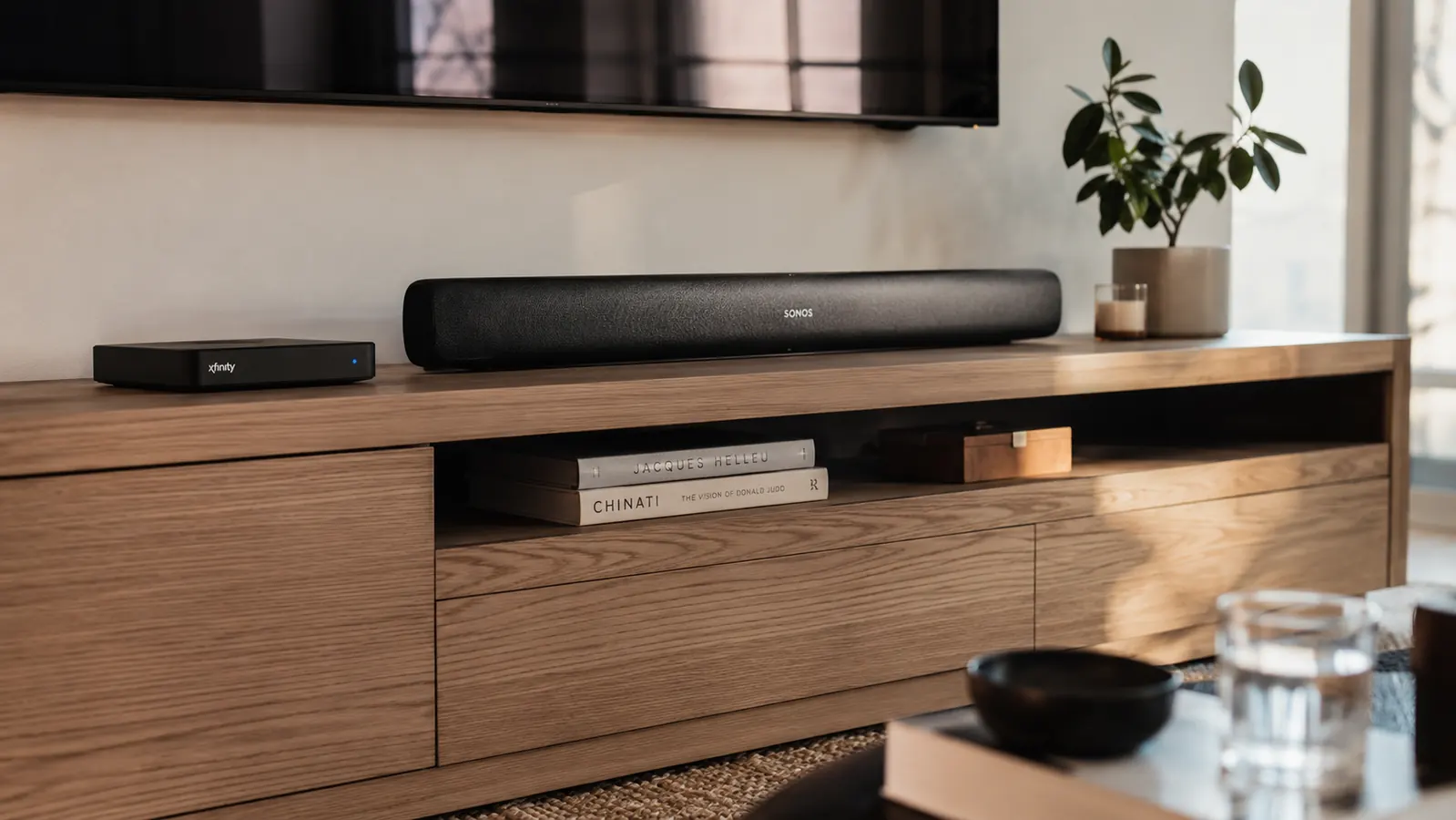
The mess behind my TV console used to make me close the cabinet doors every time company came over. A soundbar, a modem, a cable box, and a gaming console all fed into one power strip, and the cords hung down like a nest of black spaghetti. I tried the cheap route first, an eight dollar power strip cover I found while scrolling Amazon late one night. Then I bought the D-Line Cable Management Box after it kept showing up as the thing people actually recommend once they've owned both. I've now used each one for real, in real rooms, with real dust and real kids stepping over the cords, so this is not a spec sheet comparison. It's what happened when I lived with both.
Short answer if you're in a hurry: the D-Line Cable Box wins on almost everything that matters long term, heat safety, how well it actually hides the mess, and how long it holds up. The power strip cover wins on price and on fitting into a tight space where a bulkier box won't go. If you want the full breakdown of where each one earns its keep, keep reading.
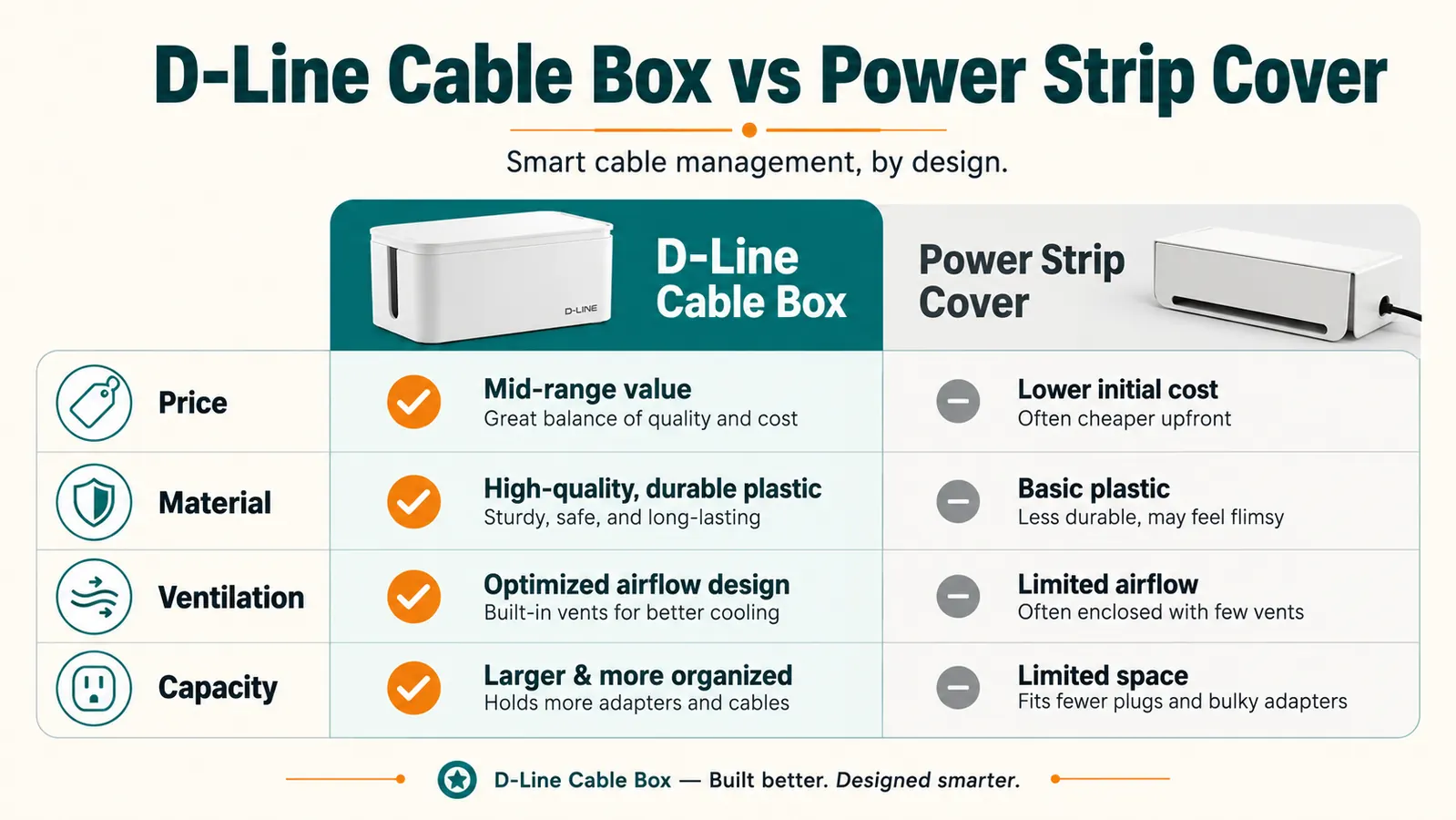
| Feature | D-Line Cable Box | Cheap Power Strip Cover |
|---|---|---|
| Price | Check today's price on Amazon | Budget-friendly (current price) |
| Material | Flame retardant ABS plastic | Thin PVC or basic ABS, no fire rating listed |
| Ventilation | Ventilated top slows heat buildup | No ventilation, heat can build up |
| Cord Entry Points | Two wide channels, one on each end | Two narrow slots, ends often left open |
| Capacity | Fits a full size 6 to 8 outlet power strip | Fits a slim 4 to 6 outlet strip |
| Stability | Non-slip rubber feet keep it in place | No feet, slides on hard floors |
| Color Options | White or black | Usually white only |
| Warranty | 1 year manufacturer warranty | No warranty on most listings |
| Best For | TVs, consoles, home offices, anything running long hours | Guest rooms, workbenches, low use outlets |
How I Tested Both, Side by Side
I ran the D-Line Cable Box behind my living room console for four months, holding a six outlet power strip, the cable box, the modem, and the soundbar's power brick. I ran the power strip cover for about six weeks before that, in the same spot, with the same devices, so the comparison isn't apples to oranges. I checked both for heat with the back of my hand after movie nights when everything had been running for hours, I checked how the cords looked from the couch, and I checked how annoying it was to unplug something when my husband needed to swap in a new streaming stick.
I also moved a smaller version of the D-Line box to my home office, where it holds a seven outlet strip under my desk next to a router. That's the setup most people are actually shopping for when they search this comparison, a tidy little box that keeps a power strip from being the ugliest thing in the room. So this isn't just a TV console review, it covers both the living room and the desk scenario.
Where the D-Line Cable Box Wins
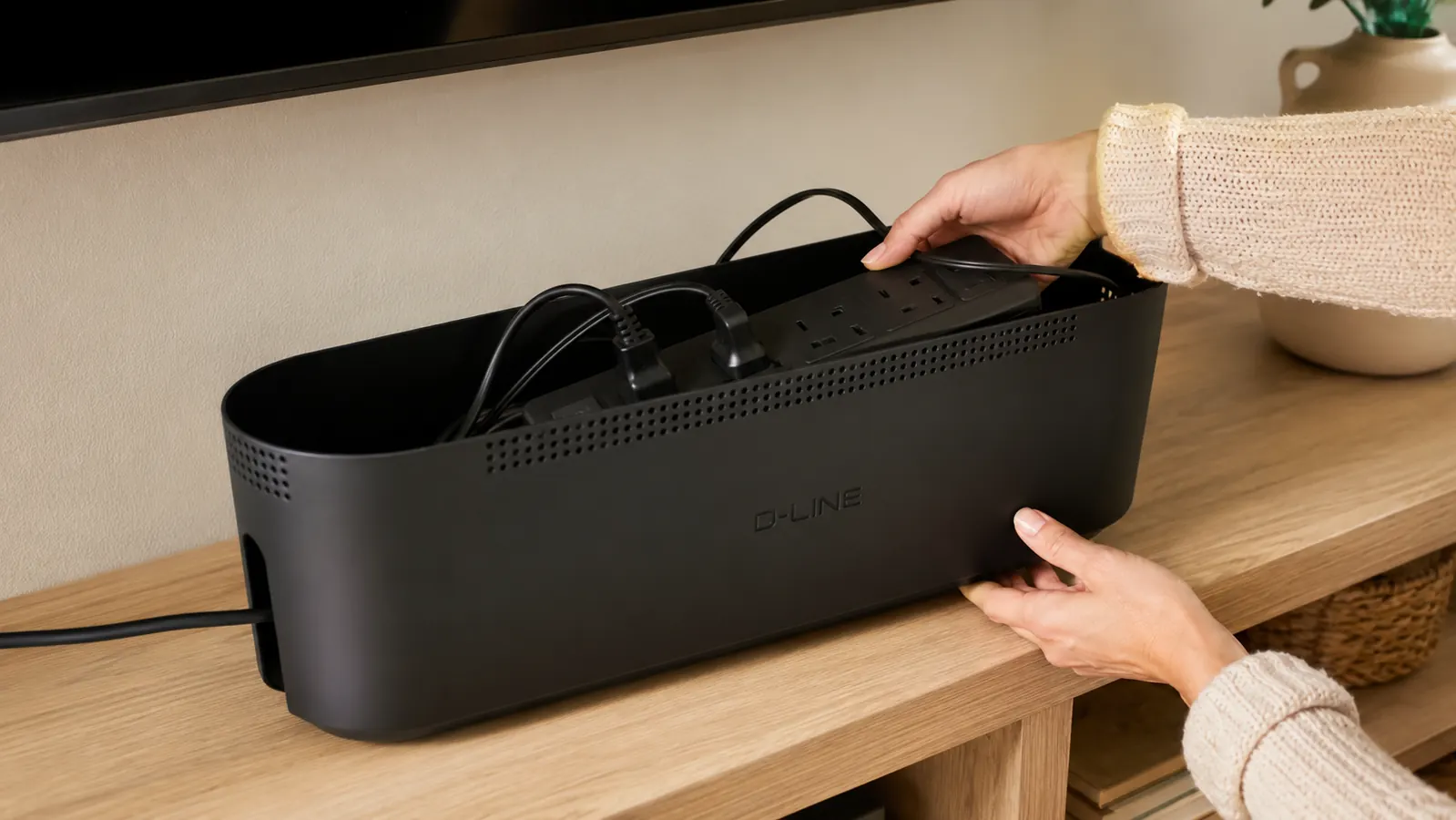
The biggest difference I noticed in the first week was heat. The D-Line box is made from a flame retardant ABS plastic with a ventilated top, so even after my kids left the console running all afternoon with the gaming system going, the inside stayed cool enough to touch comfortably. The power strip cover I'd used before had no real ventilation to speak of, just two clip together halves of thin plastic, and on a warm July afternoon the inside felt noticeably warm when I checked it. Nothing melted, but it made me nervous enough that I started unplugging the soundbar overnight, which defeats the whole point of a cable box in the first place.
The second difference is how it actually looks once it's installed. The D-Line box has a rounded, almost furniture-like shape that comes in white or black, and mine blends into the console shelf instead of looking like a plastic tub someone shoved back there. The cord entry channels on each end are wide enough that I could route six cords through without forcing anything, and the lid stays shut with a real hinge instead of snapping loose every time I bump it with the vacuum. Thirteen thousand plus reviews and a 4.5 star average told me I wasn't the only one who noticed this, and after four months of daily use I believe every one of those stars.
The last thing that sold me was the non-slip pads on the bottom. My console has a slightly uneven back panel, and the power strip cover used to slide an inch or two every time I vacuumed behind it, which meant cords getting yanked and occasionally a device popping halfway out of its outlet. The D-Line box has grippy feet that hold it in place, so once I set it and routed the cords, it stayed exactly where I put it through four months of cleaning, kids, and one very determined cat.
The Installation Difference Nobody Mentions
Setting up the D-Line box took me about ten minutes the first time, mostly because I was being careful about which cord entry channel to route the TV cable through versus the HDMI cords. The lid lifts on a hinge, the power strip sits on a small internal shelf, and once everything was tucked in I pressed the lid closed and it clicked shut. No screws, no adhesive unless you want to mount it to a wall, which I didn't need for the console setup.
The power strip cover was faster to snap together, maybe three minutes, but I had to force the two halves over a slightly thick extension cord and one of the plastic tabs cracked on my first attempt. I ordered a second one and was more careful the next time, but it's worth knowing going in that the cheaper build tolerates less force before something gives.
I didn't expect a plastic box to change how I feel about my own living room, but not flinching every time a guest glances at the TV console is worth more than I thought it would be.
Where the Power Strip Cover Wins
I want to be fair here, because the power strip cover isn't a bad product, it's just a different product solving a smaller problem. At a budget price point it costs a fraction of the D-Line box, which matters if you're covering four or five power strips around the house and don't want to spend a premium each time. For a guest room or a garage workbench where nobody is going to inspect the cord situation closely, the cheap cover does the basic job of keeping cords out of sight for a lot less money.
It's also noticeably slimmer. The D-Line box needs a few inches of depth behind the furniture to sit properly, and in my son's dorm sized apartment there simply wasn't room for it behind his tiny desk. The power strip cover, being little more than a shell, slid into a gap of about two inches and did an adequate job there. If your space is genuinely tight, that slim profile is a real advantage and not one I'd talk anyone out of.
The honest tradeoff is that the cover doesn't fully seal the ends the way the D-Line box does, so you'll still see a sliver of cord poking out on either side unless you're precise about cutting it to length. It also isn't rated for continuous heavy loads the way the D-Line box's flame retardant plastic is, so I wouldn't put it behind anything that runs hot for hours, like a space heater on a power strip or a home theater setup pulling real wattage.
What About Bulky Surge Protectors and Thick Cords
One thing I didn't think to check until I moved my office setup over was how each one handled a bulky surge protector, the kind with a wide brick shaped body instead of a slim strip. The D-Line box in the larger size swallowed my seven outlet surge protector without any squeezing, and there was still room to spare for a small travel router. The internal shelf is deep enough that thick plugs, like a laptop charger with a big transformer block, don't fight for space the way they do in a cramped cover.
The power strip cover struggled here. I tried fitting the same surge protector into it and the lid wouldn't snap fully closed, there was a visible gap along one seam where the plastic was straining. If your power strip is a slim basic model, this won't be an issue for you, but if you're running a surge protector with USB ports and a wide base, measure it against the cover's listed dimensions before you order, because more than one reviewer mentioned the same fit problem I ran into.
Tired of Explaining the Cord Nest Every Time Someone Visits?
The D-Line Cable Box is the one I actually kept using after testing both. It holds a full power strip, stays cool, and looks like it belongs in the room instead of hiding in it.
Amazon Check Today's Price on Amazon →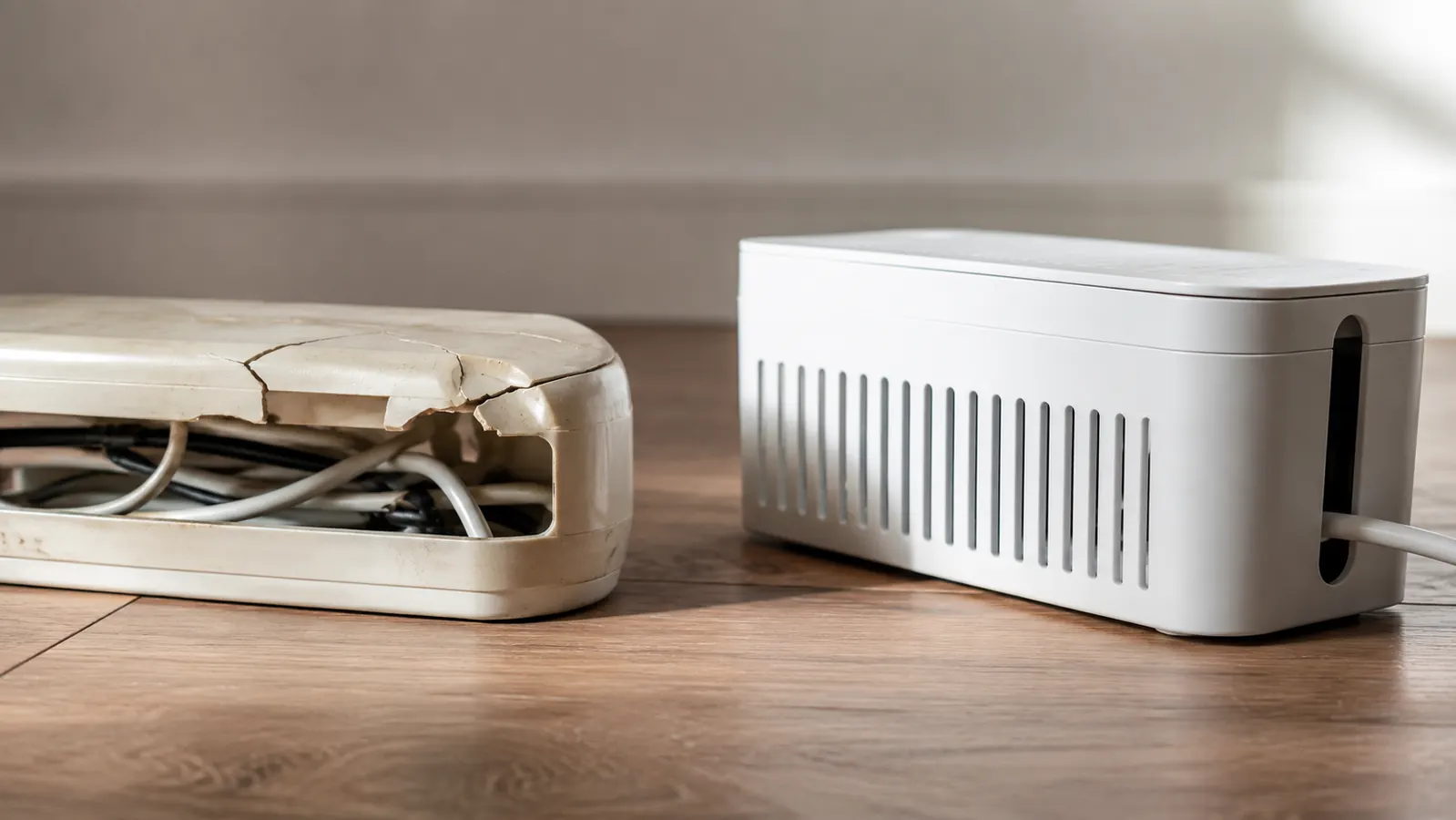
Who Should Buy Which
If you're covering a power strip that runs your TV, modem, gaming console, or anything that stays plugged in and running for hours at a time, I'd spend the extra money on the D-Line Cable Box. The ventilation and the flame retardant material aren't marketing fluff once you've felt the difference in heat buildup for yourself. If you're just tidying up a spare bedroom outlet or a workbench where the power strip barely gets touched, the cheap cover will get you most of the visual improvement for a fraction of the price. I use both in my own house now, D-Line where things run hot and long, the cheap cover where the stakes are lower.
The other thing I'd factor in is how often you touch the setup. If you're constantly swapping devices, like I do in my office when a new gadget shows up, the hinged lid on the D-Line box makes that a five second job. The power strip cover means popping two plastic halves apart every time, and after the third or fourth time that gets old fast.
The Bottom Line
Six months ago I would have told you a cable cover is a cable cover, and I would have been wrong. The D-Line box earned its higher price the first time I checked behind my console after a long movie night and didn't feel that warm plastic smell that used to worry me. If you only buy one thing to hide your cords and you want to stop thinking about it, that's the one I'd point you to.
Stop Living Around the Cord Mess
If you've read this far, you already know which one I'd buy again. Check today's price on the D-Line Cable Box and get it behind your own console this weekend.
Amazon Check Today's Price on Amazon →